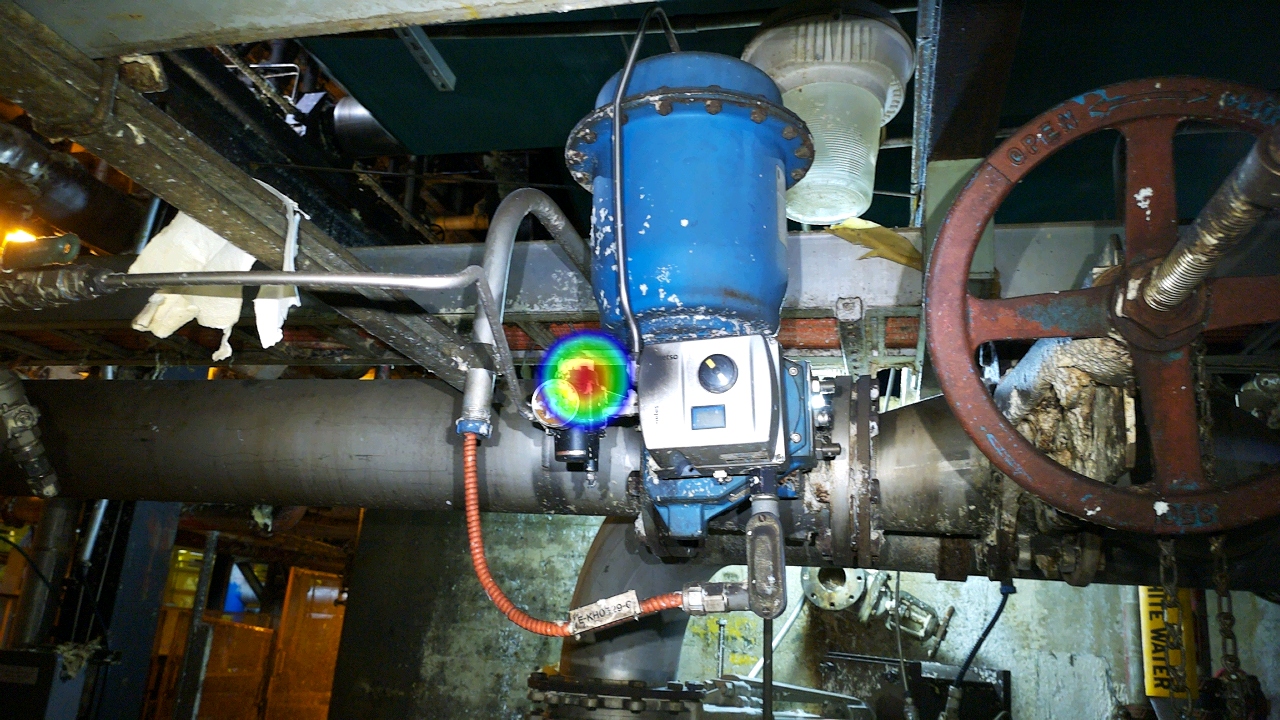
When a compressed gas system is installed, each fitting, joint, and piece of utilization equipment is meticulously checked for air leaks. No manufacturer would tolerate a leaking system on installation. Many punch lists and rework items are completed to ensure the system is 100% leak-free for acceptance of the new system.
Fast forward even a few years down the road. The plant is in full production and air leaks start cropping up, but the noise in an industrial manufacturing plant masks a majority of the leaks. Some of the blatant and obvious leaks are found, but the large majority go unnoticed. Before you know it, an additional compressor is required and installed. I have seen this over and over.
What one leak really costs
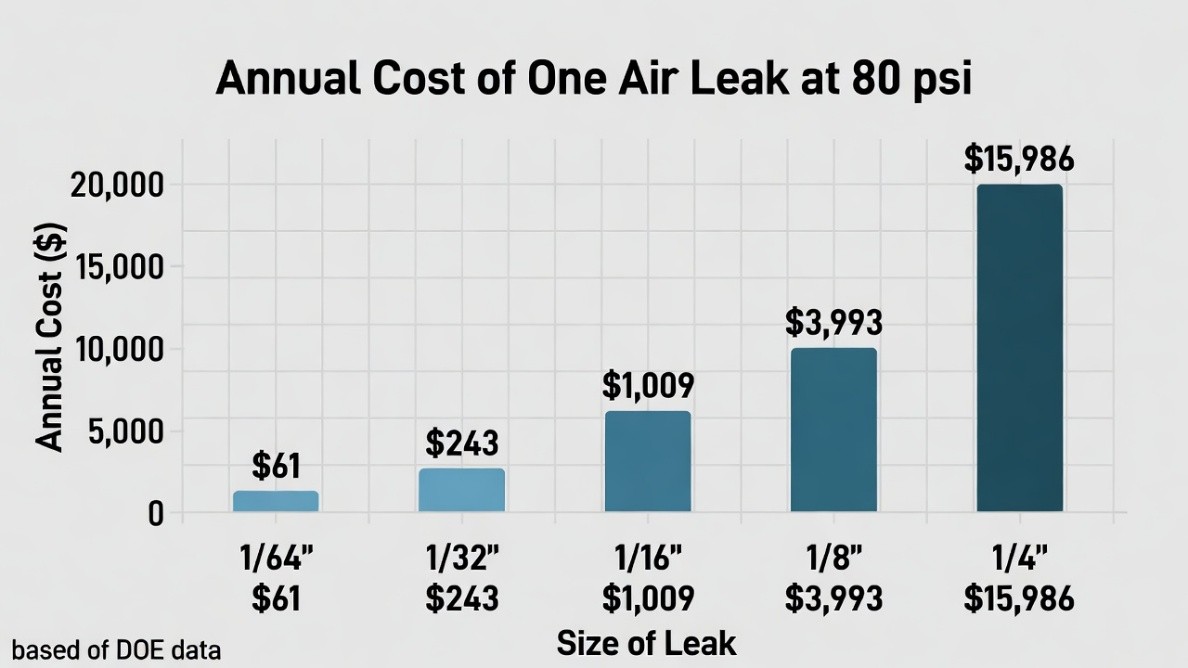
Below is a chart I created based on DOE data using $0.20 per kWh in a facility running 24/7, 365 days a year. The calculations were based on rough holes instead of smooth orifices, as I feel it is a more practical representation of a typical leak.
| Size of leak | Annual cost |
|---|---|
| 1/64" | $61 |
| 1/32" | $243 |
| 1/16" | $1,009 |
| 1/8" | $3,993 |
| 1/4" | $15,986 |
As you can see, this is typical compressed air and not a specialty compressed gas, and the energy costs are large. They compound as more leaks occur.
What can be done?
- During down days, have a team walk the facility listening, finding, and tagging air leaks.
- Have maintenance perform PMs on areas that have chronic problems.
- Utilize ultrasound equipment to find air leaks while equipment is operating.
- Utilize visual ultrasound equipment to find and tag air leaks.
Pros and cons
Walk the facility during down days
- Pro: utilizes current staff to find air leaks.
- Pro: air leaks are found and can be repaired while the equipment is idle.
- Pro: savings start the moment the air leak is repaired.
- Con: uses critical resources during an outage day and reduces the amount of maintenance that can be performed.
- Con: has to be scheduled for a down day, which is not practical for most operations.
- Con: most air systems, or parts of them, are part of the lockout or zero-energy state isolation for equipment being worked on during the outage, so many leaks will be silent during the downtime.
PMs on chronic problem areas
- Pro: the facility is actively looking for air leaks.
- Con: very inefficient use of labor that will only find a small fraction of the leaking components, because facility noise masks the compressed air leaks.
Ultrasound leak detection during operation
- Pro: this form of compressed gas leak detection is very accurate.
- Pro: ultrasound decibels and distance documentation give you the information to quantify the size and cost of the leak for repair prioritization.
- Con: expensive equipment and training are required.
- Con: time consuming and requires dedicated resources to perform in large plants.
Visual (acoustic imaging) ultrasound
- Pro: fast and accurate.
- Pro: estimates the cost of each leak based on leak size and kWh cost of electricity, for easy prioritization of repairs.
- Con: expensive equipment.
- Con: requires trained, dedicated resources.
The bottom line is you cannot afford to ignore your compressed gas or vacuum leaks. They are robbing you of energy 24/7/365, and it comes directly from your profits.
See how our compressed air leak detection surveys work, or request a quote for your facility.